
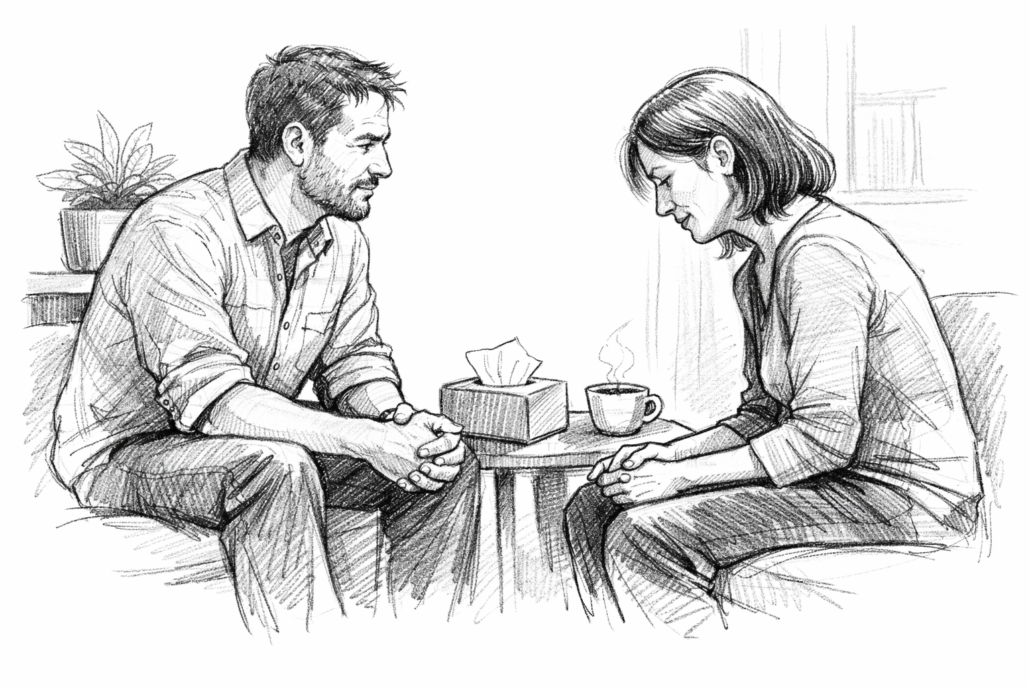
The Power in Helping
One of the profound lessons from my time working in mental health and suicide prevention is that helping is never just an act of kindness or support. Helping is also an exchange of power, sometimes subtle, sometimes obvious, but always present. Whether we are the one offering help or the one seeking it, we step into a relational space shaped by influence, vulnerability, expectation, and meaning. Helping is not simply something we do; it is something we enact with another person, and in doing so, power moves between us.
Being helped can feel comforting, relieving, and deeply human. It can also feel exposing, disorienting, or even shame‑inducing. Offering help can feel purposeful and generous, but if we are not attentive, it can slip into rescuing, directing, or controlling. Helping is everywhere in our lives, yet we rarely pause to consider the power differential that sits quietly beneath it.
Edgar Schein’s work has been foundational in supporting my understanding of this dynamic. In his book Helping (2011), Schein writes:
“Helping situations are intrinsically unbalanced and role ambiguous. Emotionally and socially, when you ask for help you are putting yourself ‘one down’.” (p. 31)
Anyone who has ever reached out in a moment of struggle knows this feeling. Asking for help can be an act of vulnerability; a step into a space where the other person’s response can either restore dignity or unintentionally diminish it.
Schein also names the corresponding “one upness” of the helper:
“Being thrust into the role of helper is immediately a gain in status and power – literally if I help someone who has fallen, or symbolically if I am a counsellor, consultant, or coach who is being asked to provide wisdom and expertise to solve a problem.” (p. 32)
Have you ever felt “one up” when offering help?
Can you recognise the power that exists when you are the one with something to give?
Schein’s reflections remind us that every helping relationship begins in a state of imbalance:
“…at the beginning, every helping relationship is a state of imbalance. The client is one down and therefore vulnerable; the helper is one up and therefore powerful.” (p. 35)
This imbalance is not inherently negative; it is simply real. The question is whether we recognise it and how we choose to work within it. When we ignore the power we hold, helping can easily become directive or paternalistic. When we acknowledge it, helping becomes a shared act of humanity, a space where dignity and agency are protected.
In counselling and community work, the ethical use of power is not about providing answers or solutions. It is about creating space for the other person’s voice, meaning, and agency to emerge. Helping becomes less about doing and more about being with. It is about stepping into relationship, recognising the power we hold, and choosing to use it with humility, curiosity, and grace. It is about resisting the seductive pull of certainty and instead honouring the other person’s capacity to make sense of their own world.
Helping is one of the most ordinary things we do, yet one of the most profound. When we approach it with awareness of power; how it moves, how it shapes, how it can heal or harm, helping becomes a quiet act of leadership. The kind that strengthens relationships, builds trust, and reminds us that we are all, at different moments, both the helper and the helped.
Reflective Questions:
- What are your experiences of the power in helping?
- Can you think of some ways that you can be more mindful of the power that you might have, and what this might do in your relationships when offering help?
- How does this play out in your world?
Author: Robert Sams Website: www.dolphyn.com.au Email: robert@dolphyn.com.au Phone: 0424 037 112
Dolphyn… the Y that calls us into community.


Leave a Reply
Want to join the discussion?Feel free to contribute!